Quick Answer: Best Hidden Gems in India for 2026
For offbeat India without over-tourism fatigue, prioritize Ziro Valley, Majuli, Tirthan, Orchha, and Dhanushkodi. These destinations balance local culture, memorable landscapes, and manageable budgets. The key is not just where you go — it is how you plan: route sequencing, local transport windows, permit timing, and realistic pacing.
This guide is built for practical travelers. You get destination intelligence, a real budget framework, seasonal selection logic, safety SOPs, and a ready-to-use structure for planning with or without a verified local host.
Travelers in 2026 are moving away from destination checklists and toward experience quality. A crowded destination can look excellent on social media yet feel shallow in real life, while a lesser-known region can deliver better food, deeper conversations, slower mornings, cleaner pricing, and stronger memories. Hidden gems are not secret because they are impossible to find. They are hidden because most people are unwilling to plan properly.
Offbeat travel in India rewards intention. You must think in systems: where you land, how you transfer, where the network drops, when local transport ends, and how weather affects roads and trails. When you handle these fundamentals early, your journey stops feeling chaotic and starts feeling immersive. That is the difference between visiting and experiencing.
Offbeat Value Score 2026
Score combines cultural depth, crowd comfort, and planning accessibility. Higher = stronger overall value for authentic, lower-noise travel.
The 10 Hidden Gems That Deliver in 2026
Ziro Valley
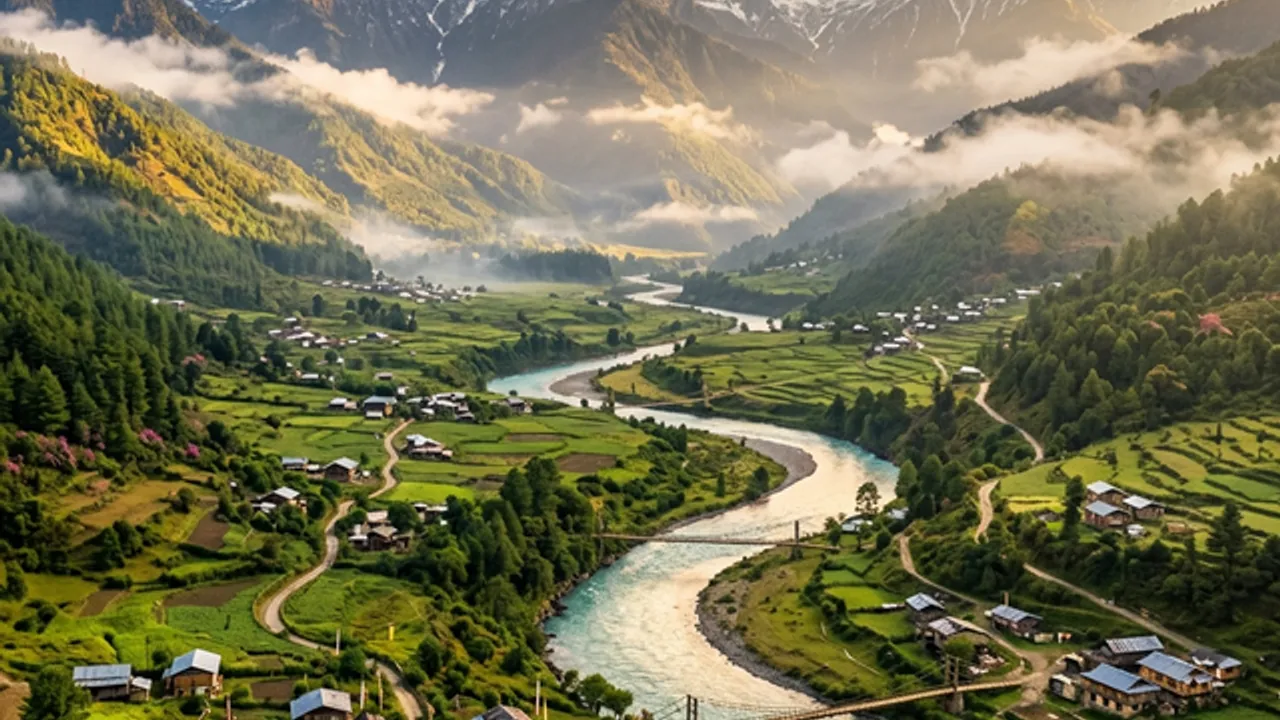
Ziro is not a weekend escape. It is a rhythm reset. Terraced fields, bamboo homes, pine forests, and Apatani cultural practices make it one of the few places where landscape and community still feel genuinely interdependent. Most travelers rush through for the September music festival, but the richer experience comes outside peak dates — when villages are quieter and conversations with hosts become unhurried. Stay at least three nights and keep one completely unplanned day.
Route discipline matters here. Flights into Itanagar or Dibrugarh, followed by road transfer, are standard — always build 24-hour delay buffers. An Inner Line Permit (ILP) is mandatory for non-Arunachali Indians and all foreign nationals; apply at least 5 days before travel. Ask before photographing private spaces or ceremonies. Respect here converts reliably into better access.
Majuli Island
Majuli feels like a living archive floating on the Brahmaputra. Monastic satras, mask-making traditions, pottery clusters, and river-facing settlements build an atmosphere that is both spiritual and genuinely fragile — the island loses land to erosion every monsoon. Ferries define all movement here, and weather shifts plans without warning. The island asks you to move with it, not through it.
Spend time with local artisans and request workshop visits through your homestay rather than relying on sightseeing loops. Homestays here are often the highlight because meals, storytelling, and local recommendations are all integrated into the stay itself. Fly or take the train to Jorhat; the ferry crossing from Nimati Ghat takes 1–1.5 hours.
Tirthan Valley
Tirthan is what many people imagine before they overbook Manali. Cold river air, village trails, wooden homestays, and easy access to the Great Himalayan National Park (UNESCO World Heritage) make it ideal for nature-led trips. The region supports layered travel styles: birding, soft trekking, reading retreats, and food-focused stays with local produce — all from the same base.
Use one homestay for 3 nights and do day excursions rather than changing accommodation. This reduces mountain-road fatigue and keeps evenings calm. Works especially well for mixed-energy groups where one person can trek while another explores village cafés or river paths.
Gandikota — India's Grand Canyon
Gandikota is all geometry and wind. The Pennar gorge cuts through dry red terrain with dramatic scale, earning it the nickname India's Grand Canyon. The fort complex on the rim adds layers of Vijayanagara and later Mughal history. Sunrise and blue hour are exceptional. It works best when planned around light: arrive before sunset, stay overnight in the APTDC tents or camps near the fort, catch dawn from the gorge rim before leaving. Day trippers see about 30% of what Gandikota actually offers.
Dholavira
An archaeological lesson in systems thinking. The Harappan city of Dholavira — a UNESCO World Heritage Site since 2021 — demonstrates ancient water management, city planning, and settlement logic at a scale that becomes viscerally tangible when you walk the site with genuine contextual knowledge. Plan this as a focused heritage route, not an add-on to a Rann of Kutch trip. Heat and distances require realistic timing, and a local guide who can explain the urban planning features multiplies the value of every hour on-site significantly. Fly to Bhuj; road-transfer is 2.5 hours.
Marari Beach
Marari is for travelers who are tired of beach noise but still want coastal life. Fishing boats, quiet lanes, coconut groves, and low-key stays offer a restorative version of Kerala's shoreline. Excellent for couples, remote workers, and wellness travelers who want Ayurveda without resort crowds. The ideal structure: sunrise walk on the beach, local seafood lunch at a fisherman's home, an evening Ayurveda session, and a sundowner on the sand. Keep the schedule deliberately light. Nearest station is Mararikulam, 2 km from the beach.
Lonar Crater Lake
Where geology meets mythology. A meteor impact estimated at 52,000 years ago created this saline-alkaline crater lake in Maharashtra's Buldhana district, and the surrounding forest-temple zone gives Lonar a surreal, singular atmosphere. The lake water is among the few naturally occurring saline alkaline water bodies in the world. Good for short, knowledge-rich trips of 1–2 nights. Trails around the rim can be uneven — wear proper footwear and avoid isolated late movement. Reading a little about crater ecology before arrival improves the visit significantly. Nearest city: Aurangabad (130 km).
Orchha
Temple silhouettes on the Betwa, palace murals, cenotaph lines stretching toward the river, and the extraordinary Chaturbhuj Temple — Orchha creates a cinematic heritage atmosphere that stays with you. Stay in the old town, keep morning and evening windows clear for the architectural light, add one local history walk and one food exploration session in the market lanes. Depth beats volume here — resist the urge to check off every monument entry. Train to Jhansi (15 km); local transport to Orchha takes 30 minutes.
Dhanushkodi
Geography stripped to essentials. The Bay of Bengal on one side, the Palk Strait on the other, wind-heavy roads, and the ghost-town remains of a city cyclone-wiped in 1964. This is not about attraction density — it is about place memory at its most raw. Pair logically with Rameswaram (18 km). Arrive early, avoid night movement on the sand roads, carry hydration and sun cover. Sunrise and sunset both deliver exceptional light in clear conditions. The only access is by shared jeep or SUV from Rameswaram — no private vehicles are permitted beyond the entry gate.
Netarhat
One of the least publicized hill experiences in eastern India, known as the "Queen of the Chota Nagpur Plateau." Forest roads, highland air at 1,099m, and sunrise viewpoints at Magnolia Point and Sadni Falls offer a calm, uncrowded environment without the commercial clutter of mainstream hill stations. Strong for short reflective trips, writers, and anyone needing mental decompression. Services are lighter than established hill stations — book core logistics 2–3 weeks in advance and keep a simple route plan. Nearest city: Ranchi (156 km).
Planning Table: Route, Budget, and Effort
| Destination | Ideal Stay | Budget / Day | Difficulty | Best Window |
|---|---|---|---|---|
| Ziro Valley | 3–4 nights | ₹2,800–4,500 | High | Mar–Oct |
| Majuli Island | 2–3 nights | ₹2,000–3,800 | High | Oct–Mar |
| Tirthan Valley | 3 nights | ₹2,500–4,200 | Medium | Mar–Jun, Sep–Nov |
| Gandikota | 1–2 nights | ₹1,800–3,200 | Low | Sep–Feb |
| Dholavira | 2 nights | ₹2,500–4,000 | Medium | Nov–Feb |
| Marari Beach | 2–4 nights | ₹2,700–5,500 | Low | Oct–Mar |
| Lonar Crater | 1–2 nights | ₹1,600–3,000 | Low | Oct–Feb |
| Orchha | 2 nights | ₹1,900–3,400 | Low | Oct–Mar |
| Dhanushkodi | 1–2 nights | ₹2,000–3,800 | Medium | Nov–Feb |
| Netarhat | 2 nights | ₹1,700–3,200 | Medium | Oct–Feb |
Season Suitability Guide
Route reliability and on-ground comfort score by season across these 10 offbeat destinations.
Winter (Oct–Feb)
92 / 100 ⭐ Best
Post-monsoon (Sep–Oct)
86 / 100 ⭐ Excellent
Summer (Mar–Jun)
74 / 100 — Good for hills
Monsoon (Jul–Sep)
58 / 100 — Experienced only
Field Tips You Will Actually Use
Execution Checklist Before You Leave
More From TravelBuddiz
Travel Deeper, Not Faster
Hidden gem travel is about quality of presence, not collecting obscure pins on a map. Choose depth over speed in 2026. The routes that change you are often the quieter ones.
Find a Group Trip to These Destinations →